Authors:
Berber Kramer, Senior Research Fellow and Solution Track Lead, International FoodPolicy Research Institute; Esther Nzuki,Communication Analyst, Alliance of Bioversity International and CIAT; Julie Ghostlaw, Country Program Manager, International Food Policy Research Institute; Shalika Vyas, Scientist I, Alliance of Bioversity International and CIAT
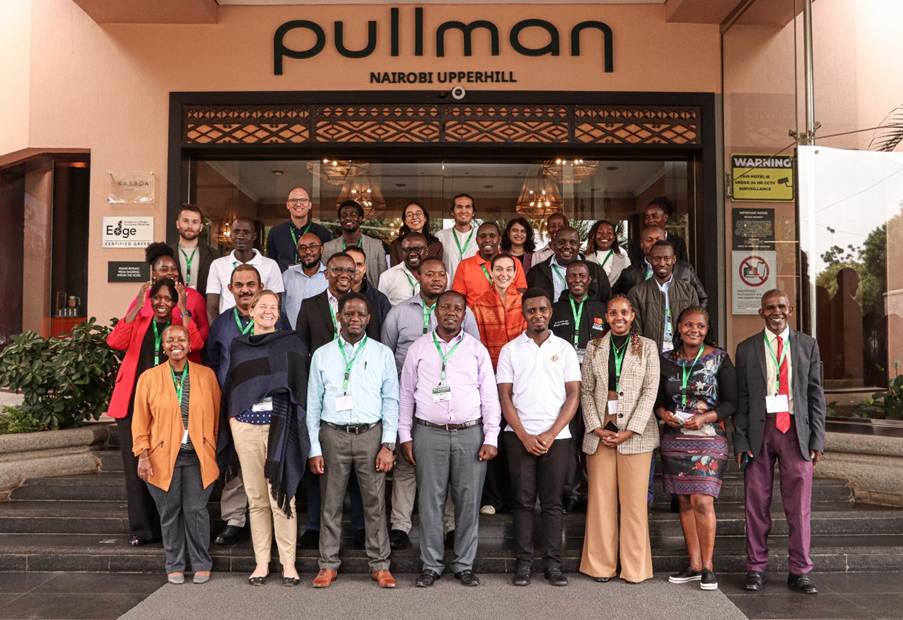
A stakeholder consultation on challenges, opportunities, and action pathways
Smallholder farmers and agricultural SMEs account for around 80% of Africa’s food production, yet they face an estimated $75 billion annual gap to finance the seeds, fertiliser, tools, and services that would make them more productive and resilient. Agriculture employs over 60% of Africa's workforce and contributes between 20% and 40% of GDP, but commercial banks still channel less than 6% of their lending to the sector.
A major challenge for banks’ lending to farmers is weather risk: in Kenya, climate variability reduces commercial banks’ financial stability, due to non-performance of agricultural loans. Insurance companies also struggle to assess an individual farmer’s risk or efforts to prevent damage. This has made insurance companies reluctant to offer comprehensive coverage to smallholder farmers.
In Africa, only 2% of farmers have access to agricultural insurance, compared with 20% in the rest of the world. Climate change will further compound these risks in the future. The current forecast indicates an 80 percent probability that an El Niño will develop in 2026, and it could become one of the most intense on record. El Niño can lead to severe droughts and excessive rainfall, potentially damaging crops on a wide scale. In that context, a loan can quickly become a debt trap, making lenders even more cautious and farmers less willing to take out loans.
Bundling credit with insurance
This is where bundling agricultural credit with insurance becomes important. Pairing a loan with insurance ensures that both the farmer and the bank are protected and that credit access improves: if drought or flood destroys the crop, an insurance payout covers the loss, preventing the farmer from defaulting. That protection changes lender and farmer behavior alike.
Beyond uptake, impact evaluations show agricultural insurance can increase farmer investment by 20–30% while shielding households from the worst weather shocks. In short, when farmers feel safe to invest, they plant better seeds, apply fertilizer, and grow more.
ACRE Africa has bundled index insurance with credit and farm inputs to reach close to 200,000 farmers across Kenya, Rwanda, and Tanzania, building on partnerships with platforms like M-PESA. However, a challenge with past insurance schemes has been that the index used to trigger insurance payouts does not perfectly track an individual farmer’s crop damage, reducing trust among both farmers and lenders.
To improve product quality and restore trust, IFPRI and ACRE Africa developed a picture-based insurance solution that uses smartphone photos to assess crop damage when the insurance index fails to trigger a payout. When offered such insurance, uptake increased by nearly 20 percentage points, with the largest effects among women farmers and farmers in semi-arid areas.
Developing an action plan to expand a digital financial service platform for smallholder farmers in Kenya
Against this backdrop, the International Food Policy Research Institute (IFPRI) and the Alliance of Bioversity International and CIAT, with support from the CGIAR Scaling for Impact Program, convened a two-day stakeholder consultation workshop in Nairobi, Kenya, to co-develop a scaling strategy for ACRE Africa’s Tool for Agricultural Risk Assessment (TARA). The workshop brought together representatives from financial institutions collaborating with the lead implementing partners, as well as (re-)insurers, aggregators, input providers, regulators, government, and (champion) farmers to identify barriers, opportunities, and priority actions for expanding TARA's adoption.
TARA is an AI-based, location-, season-, and crop-specific risk scoring and monitoring tool that transforms climate and economic data, as well as satellite and smartphone images, into lending decisions, insurance recommendations, and agro-advisories. By enabling financial institutions to better assess agricultural credit risk and bundle (picture-based) insurance, credit, and potentially credit guarantees for farmers who lack traditional collateral, the platform has the potential to expand access to affordable credit and high-quality insurance products tailored to the needs of smallholder farmers.
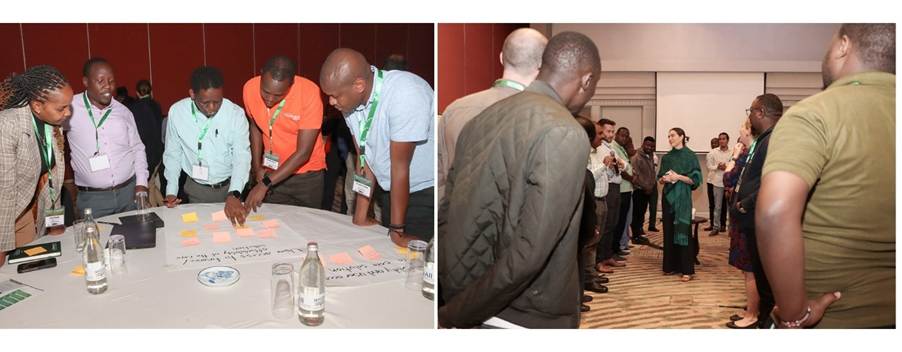
Participants sharing insights.
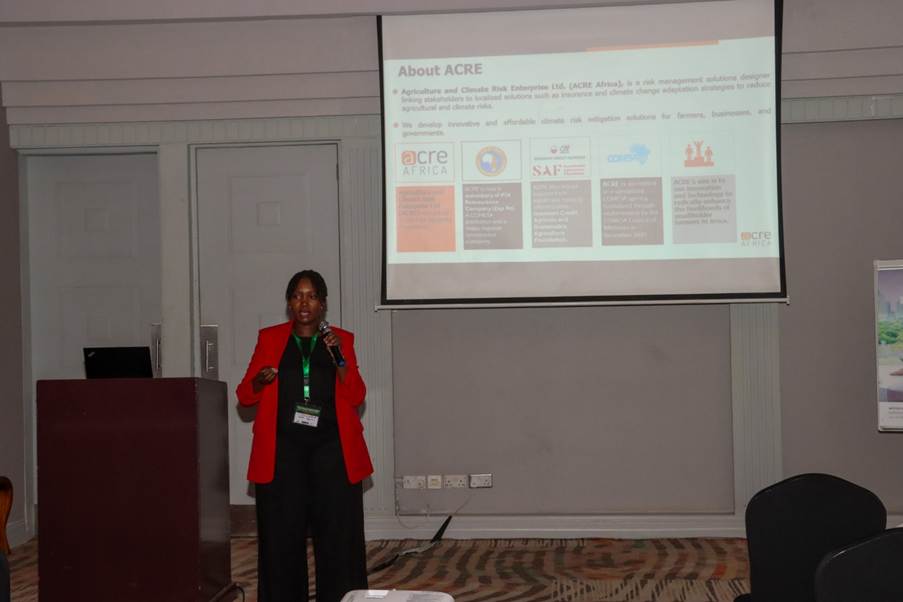
Presentation on ACRE Africa, by Lilian Waithaka, who is the Program Manager
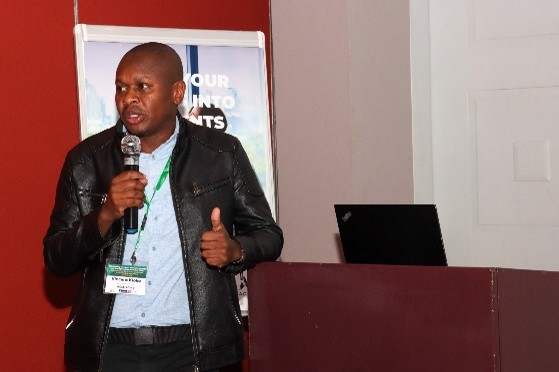
“At ACRE Africa, we believe TARA is a key enabler of digital financial services, helping financial institutions integrate climate risk insights into credit assessment. By complementing traditional credit scoring, TARA supports increased access to credit and insurance for smallholder farmers, strengthening their resilience and financial inclusion,” shared Vincent Kioko, Digital Solutions Manager, ACRE Africa.
Workshop participants agreed to reach 50,000 smallholder farmers using TARA-enabled loans bundled with high-quality insurance in Kenya by 2028, with 50% women, 25% youth, and 5% marginalized people, including individuals with disabilities. This focus on inclusion matters because these groups have historically been left behind. A World Bank study across five African countries found women received only 10% of credit allocated to smallholders, and just 1% of total agricultural credit. Moreover, insurance often fails to reach, benefit, and empower women equitably.
Strong innovations fail to scale when system awareness, coordination, guarantees, regulation, and inclusion have not been addressed. To identify these enablers for the case of TARA, the workshop used the CGIAR’s Innovation Packages and Scaling Readiness (IPSR) method. This approach moves participants from diagnosis to solutions and action planning through four steps: identifying the bottlenecks standing between the innovation (TARA-enabled credit linked with photo-based insurance) and scale; proposing enabler solutions to these bottlenecks; scoring each enabler on a 0–9 scale for both maturity and actual use to prioritize enablers for subsequent action planning; and then building concrete action plans with owners and 30- and 90-day milestones.
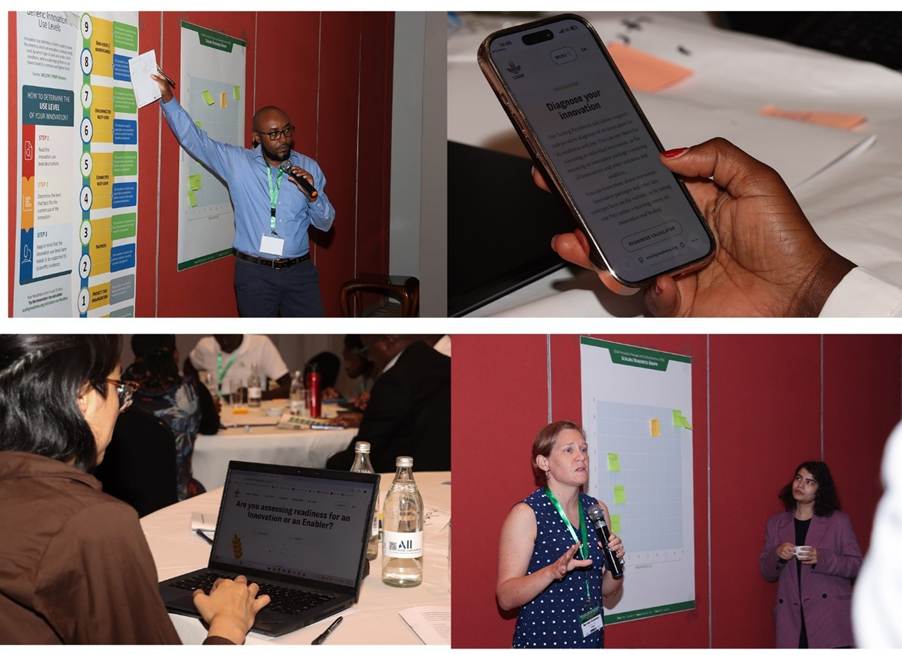
Participants familiarized themselves with the CGIAR IPSR tool, establishing bottlenecks and enablers to scaling innovations. Photo: Esther Nzuki/Alliance
From diagnosis to action
Over two days, the group converted that thinking into a practical agenda. Participants agreed to set up a technical working group to resolve coordination failures across supply (lenders), demand (farmer awareness), and monitoring. They committed to embedding a gender and social inclusion lens pillar-by-pillar rather than treating it as an afterthought, exploring mechanisms such as scoring credit across multiple value chains so women can apply alongside household members, and gender-responsive product design features to empower women in household financial decision-making.
On the policy and regulatory environment, the room called for a convening role between Kenya's Ministry of Agriculture, the National Treasury, the Central Bank of Kenya, and other stakeholders in the agricultural financial inclusion space, the consolidation of collateral registries so farmers can use their harvested and growing crops as loan collateral, and the inclusion of microfinance institutions and SACCOs (Savings and Credit Cooperative Organization) as insurance distribution agents. A credit guarantee component was proposed, with bundling with insurance, allowing for lower fees of credit guarantees issued through TARA. Participants also discussed the need to bring more behavior research and human-centered design into product innovation, including agent incentives for increased distribution channel efficiency.
Distribution was reimagined too, through a localized aggregation model that links financial institutions and the farmers to whom they lend to cooperatives, community-based organizations (CBOs), and offtakers, lowering input and insurance costs through pooling, and improving farmers’ profitability by improving market access. Awareness repeatedly emerged as a critical enabler; participants prioritized financial and insurance literacy programs in local languages, demonstration sessions to build trust in satellite and picture-based monitoring, and recurring stakeholder feedback loops to keep the solution grounded in farmers' realities.
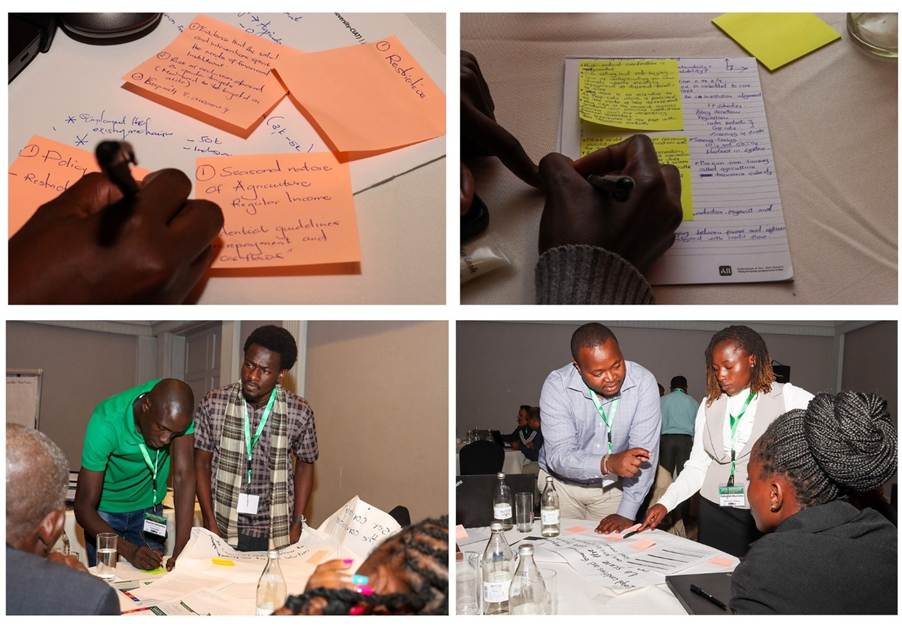
As they engaged, participants mapped out the bottlenecks and the solutions that can support scaling TARA in Kenya. Photo: Esther Nzuki/Alliance
Why it matters
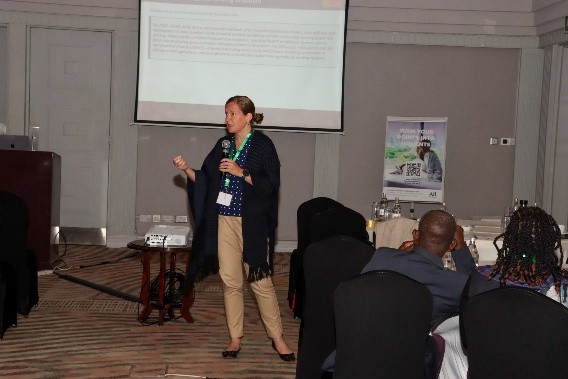
“We want to make sure this innovation genuinely benefits people, that it's not just another project, but something sustainable. Looking ahead, if we reach our target of 50,000 farmers by 2028, that shouldn't be the endpoint. Scaling these types of innovations should keep going, expanding their reach, continuing to innovate on the solution, and strengthening the pathways for impact even further," stated Berber Kramer, Senior Research Fellow and Solution Track Lead, IFPRI.
The consortium’s scaling ambition speaks directly to Africa's wider challenge. Closing the continent's agricultural financing gap is, in the African Development Bank's words, "a solvable problem with an enormous potential reward." Making farmers bankable through smart data, bundled risk protection, and genuine partnership, tools like TARA and picture-based insurance offer a path toward a virtuous cycle of agricultural growth, one that reduces poverty, strengthens food security, and lets financial services work for both providers and farmers.
The workshop was engineered to produce something durable: a confirmed scaling ambition, an honest map of the barriers standing in the way, and a prioritized set of solutions each carrying a named owner, a root cause, and a pledge to reconvene after 90 days to track progress.
Acknowledgement
This research is being implemented under the Scaling for Impact program and by CGIAR researchers from the International Food Policy Research Institute (IFPRI) and the Alliance of Bioversity International and CIAT (Alliance), in close partnership with ACRE Africa (Kenya) and Dvara E-Registry (India). We deeply appreciate key insights from stakeholders representing the Kenya National Treasury, Yale University, Juhudi Kilimo, Busara, Vision Fund International, Farm Africa, Siraji SACCO, Britam, Greenwells, Financial Sector Deepening Kenya, Norwegian Refugee Council, University of Bonn, and APA Insurance.
We would like to thank all funders who supported this research through their contributions to the CGIAR Trust Fund.